Start with the equipment and the project
Planning for a used Carrier chiller in Florida starts by separating two questions: what is being sold, and how can it be removed safely? The answers depend on the actual machine and property, not on a standard assumption about every chiller. We buy used and surplus equipment in Florida, consider all tonnages and refrigerants, and do not require a test run. An owner can share any existing details about the unit, its connections and its location without diagnosing it. Early coordination makes the offer and removal conversation easier to understand.
Identify the actual machine, not just the brand
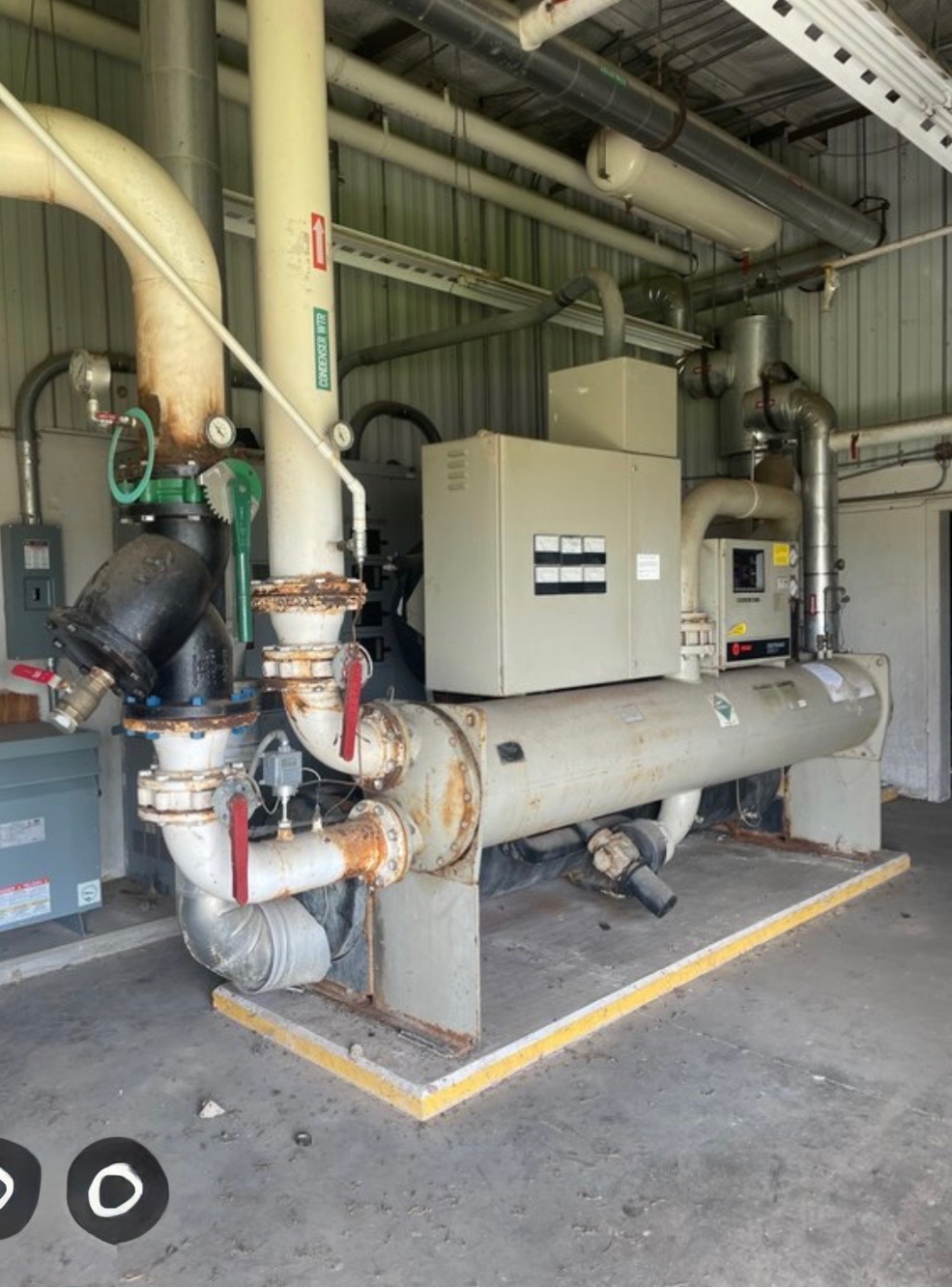
The manufacturer name is a useful starting point, but it does not by itself identify a chiller's model, capacity, refrigerant, weight or present condition. If an accessible nameplate or equipment record is available, share its details along with a safe photograph of the full unit. If the model cannot be read, describe the machine and its surroundings instead; the absence of a label does not prevent an initial discussion. We are a buyer of used equipment, not a claim of manufacturer authorization or affiliation. The offer and removal approach depend on the actual unit and agreed scope.
No test run is required
The equipment does not need to be started or tested for us to consider it. That can matter when a chiller is idle, disconnected, missing a component or no longer part of the active cooling plan. Describe the known condition honestly and distinguish what you have observed from information you do not have. A photograph or old service note may be useful, but neither is a prerequisite for making contact. Do not reconnect equipment or attempt a test simply to request an offer. The buyer can review available information and discuss any uncertainties as part of the proposed sale.
Plan lifting and rigging around actual conditions
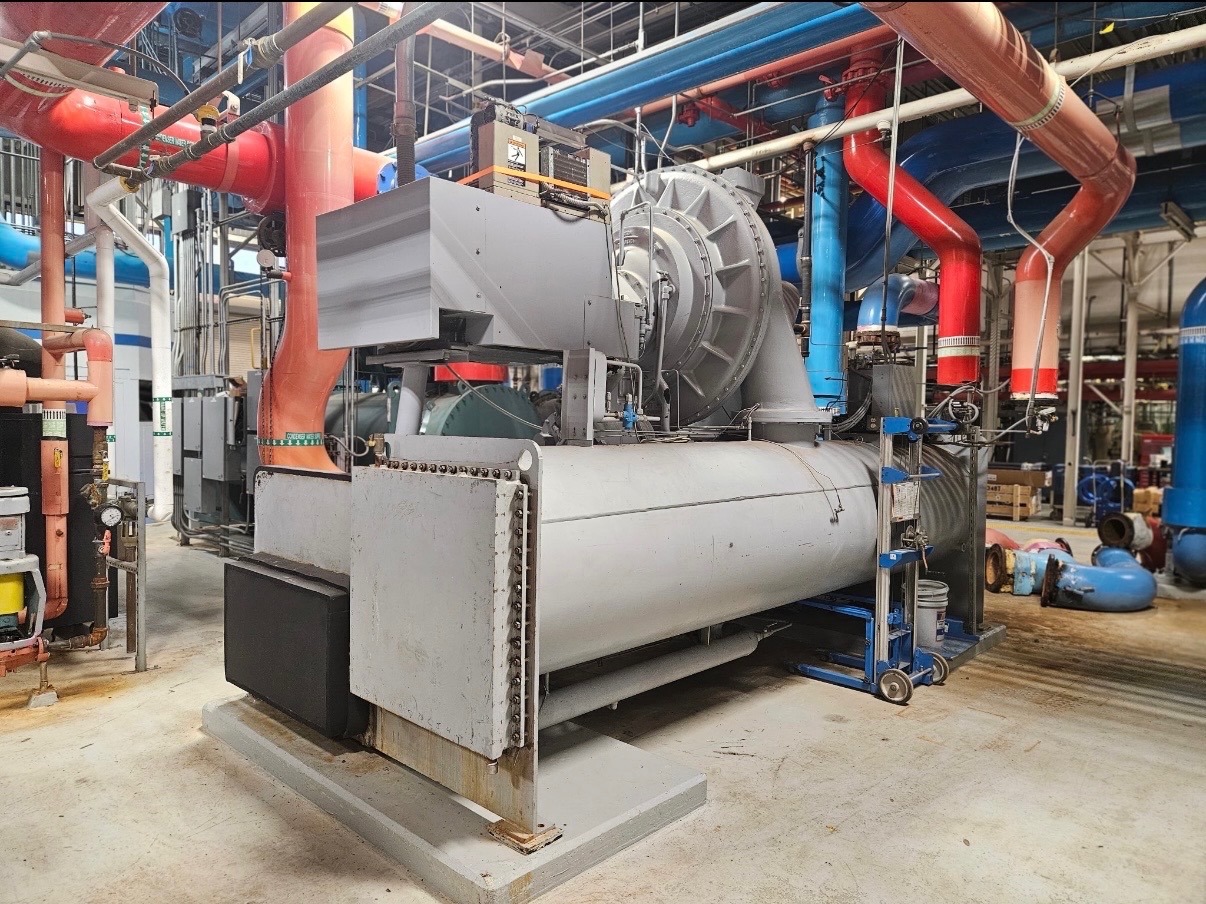
Rigging is a planning question, not a standard procedure that can be selected from the equipment name alone. The team must understand the load, available attachment information, clearances and the route to a loading area. If a crane is appropriate, its placement and the lift path must be evaluated against the actual property conditions. Other handling methods may be appropriate in different circumstances. We handle the crane and rigging work needed for the agreed project. Owners should not improvise a lift, move a heavy unit or rely on a cooling-capacity number as an estimate of weight.
Coordinate the owner, operator and contractors
The person requesting an offer may not control the equipment or the building. An owner can authorize a sale, a facility manager may know the operating constraints and a mechanical contractor may understand the connections. These roles can be held by one person or several. Identify the appropriate contacts and make sure the buyer knows whom to ask about each issue. Existing documents and observations are useful, but none should be treated as a substitute for the owner's approval. A coordinated discussion helps define access, shutdown needs, the work scope and the payment terms.
Keep preliminary information gathering safe
Information for an offer should be collected from areas the facility has already made safe and accessible. A visual description, a photograph taken from a permitted position or an existing record may be enough to begin. Do not remove panels, work on electrical equipment, disconnect piping or attempt to handle refrigerant to prepare for a buyer. A unit that is silent may still have connected systems or stored energy. We handle the agreed recovery and disconnect work through appropriate qualified personnel. Site-specific hazards and access rules should be discussed with the responsible facility contact.
Use the nameplate without relying on it exclusively
If it is safe and accessible, a photograph of the equipment nameplate can help identify the manufacturer, model, serial number and rated capacity. Do not remove covers or approach energized equipment simply to take a picture. If a plate is faded, blocked or missing, say so and share whatever identifying information is already available. A broad photograph of the whole machine and its surroundings can provide additional context. Old records can also be useful, but a service history is not required. Each label should be matched to the correct unit when several similar machines are present.
What to share when you contact us
Start with the city or county, the number of chillers and any available manufacturer, model, capacity or condition information. Describe where the equipment sits and whether it is still connected, if known. Mention access restrictions, the desired timing and anything you are uncertain about rather than filling in missing details. We can discuss a cash offer, upfront payment and an agreed plan for recovery, disconnects, rigging, loading and covered freight. An owner or authorized representative can then decide whether the proposed terms and scope fit the project.
- Identify the equipment and the person authorized to sell it.
- Share safe photographs or existing records if available; neither testing nor complete records are required.
- Discuss access, included work, payment and timing before scheduling removal.