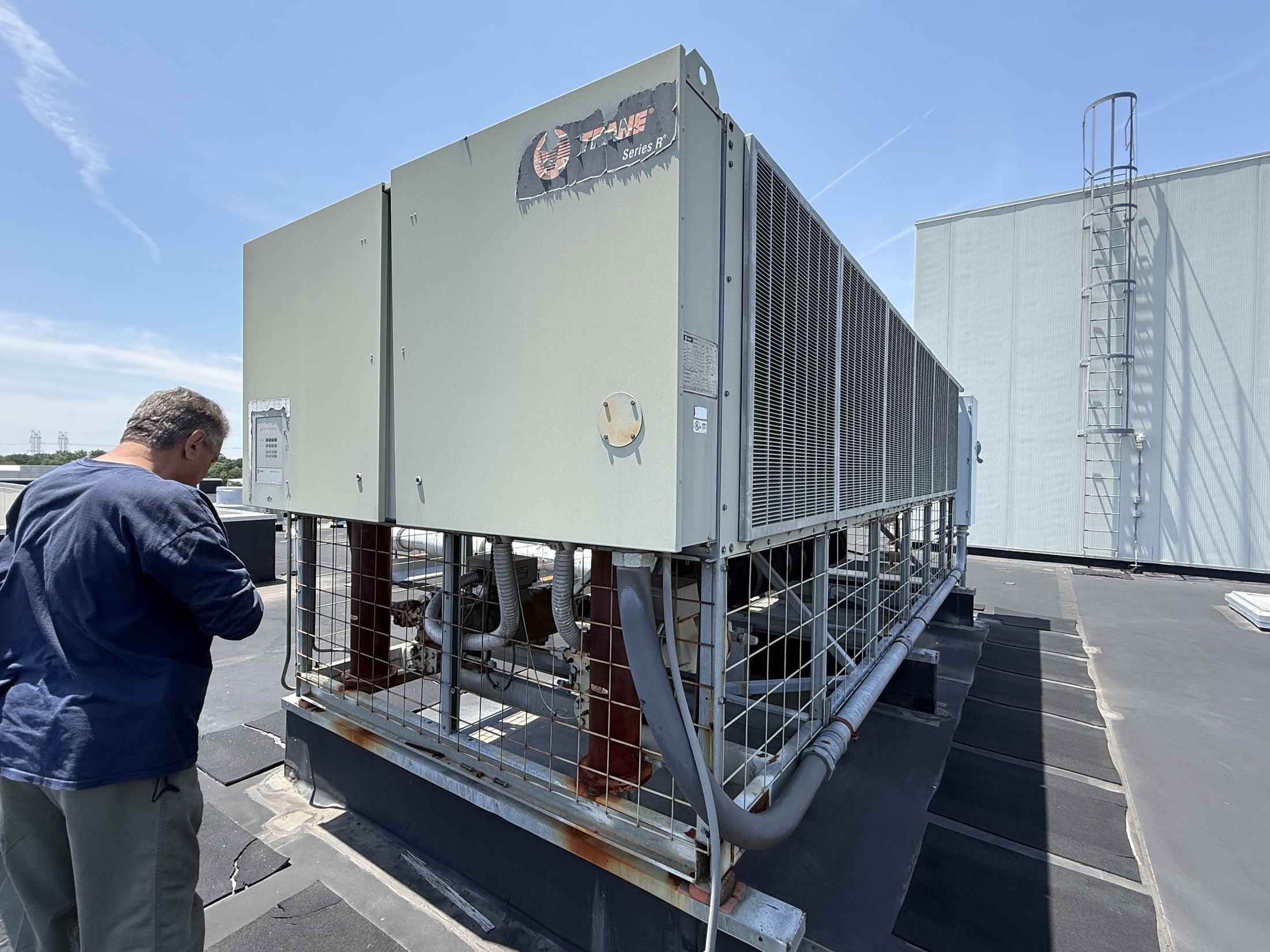
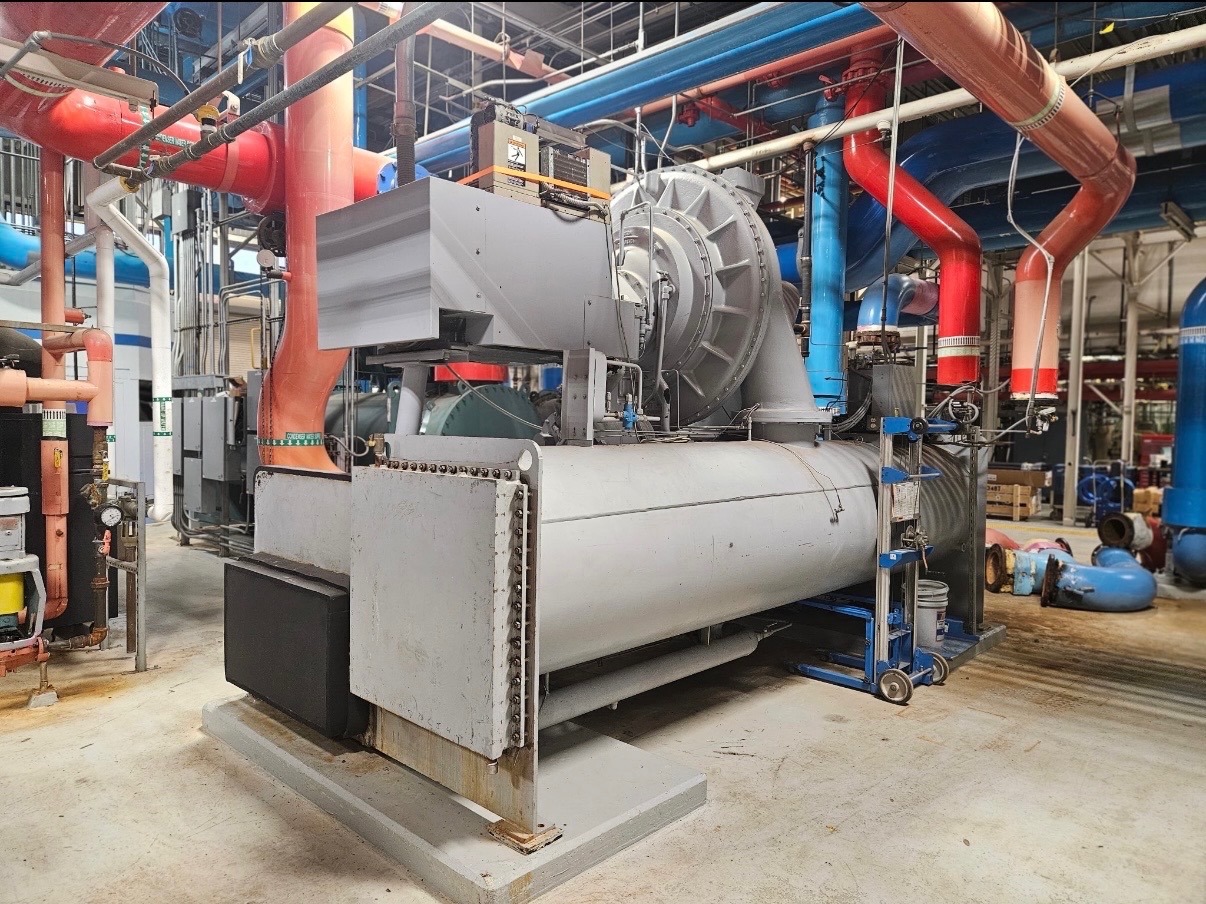
Start with the equipment and the project
For anyone researching a mechanical room chiller in Fort Myers, Florida, the practical starting point is the equipment owner and the unit that owner wishes to sell. A model number can help, but missing records do not need to prevent an initial inquiry. We buy used and surplus chillers across Florida and consider all tonnages and refrigerants; no testing is required. The buyer also needs to understand the likely access route, any known connections and which equipment remains outside the sale. Those details support an agreed scope rather than a guess about the project.
Removing equipment from a mechanical room
An indoor machine can share a confined space with pipework, controls or equipment that must remain in service. Show the buyer where the chiller sits, which items are intended for sale and how personnel currently reach the room. An apparent doorway on a floor plan may not describe the whole extraction route if there are turns, low clearances or other obstacles. A removal plan should account for those conditions before work begins. The equipment owner and facility team can help identify what must stay in place; qualified crews determine the appropriate disconnect and handling arrangements.
Service planning starts with the actual property
The city or county tells us where a project is being considered, but it does not reveal where a particular machine is located within a property or how it can be removed. Tell us whether the unit is indoors, outside or on a roof, and share any access limits known to the facility team. Avoid assuming that a nearby buyer must have a local office or that every site has the same loading arrangements. We buy used chillers throughout Florida and coordinate the agreed work. The practical plan depends on the equipment, ownership, access and site schedule.
No test run is required
The equipment does not need to be started or tested for us to consider it. That can matter when a chiller is idle, disconnected, missing a component or no longer part of the active cooling plan. Describe the known condition honestly and distinguish what you have observed from information you do not have. A photograph or old service note may be useful, but neither is a prerequisite for making contact. Do not reconnect equipment or attempt a test simply to request an offer. The buyer can review available information and discuss any uncertainties as part of the proposed sale.
Describe the access path early
Access planning begins where the equipment sits and continues to the place where it can be loaded. Explain whether the chiller is on a roof, at ground level or inside a building, and identify any known restrictions such as narrow doors, active work areas or limited staging space. These are questions to resolve, not assumptions about any particular property. The removal team can use the information to plan rigging and loading appropriate to the job. The facility contact should also explain how personnel enter the site and whether another trade is expected to be working along the same route.
Plan lifting and rigging around actual conditions
Rigging is a planning question, not a standard procedure that can be selected from the equipment name alone. The team must understand the load, available attachment information, clearances and the route to a loading area. If a crane is appropriate, its placement and the lift path must be evaluated against the actual property conditions. Other handling methods may be appropriate in different circumstances. We handle the crane and rigging work needed for the agreed project. Owners should not improvise a lift, move a heavy unit or rely on a cooling-capacity number as an estimate of weight.
Photographs that make the conversation useful
A few safe, clear photographs can show different aspects of the same project: the whole chiller, any accessible identification plate, surrounding connections and the route toward an exit or loading area. Wide images help show clearances, while close images can make existing labels easier to read. There is no need to open equipment or enter a restricted area to obtain a picture. If photographs are unavailable, begin with a written description and explain the limitations. The buyer can discuss what further information would be useful; pictures are helpful, not a condition for asking about an offer.
What to share when you contact us
To begin, identify the equipment and the person who can approve its sale. Share any safe photographs or existing records, but do not worry if the nameplate or operating history is unavailable. Explain whether the unit is indoors, outdoors or on a roof, and identify any known access constraints. We can consider the chiller without a test and discuss an upfront cash offer and the agreed removal work, including covered freight. Confirm the scope, payment timing and site contacts before scheduling the work.
- Identify the equipment and the person authorized to sell it.
- Share safe photographs or existing records if available; neither testing nor complete records are required.
- Discuss access, included work, payment and timing before scheduling removal.