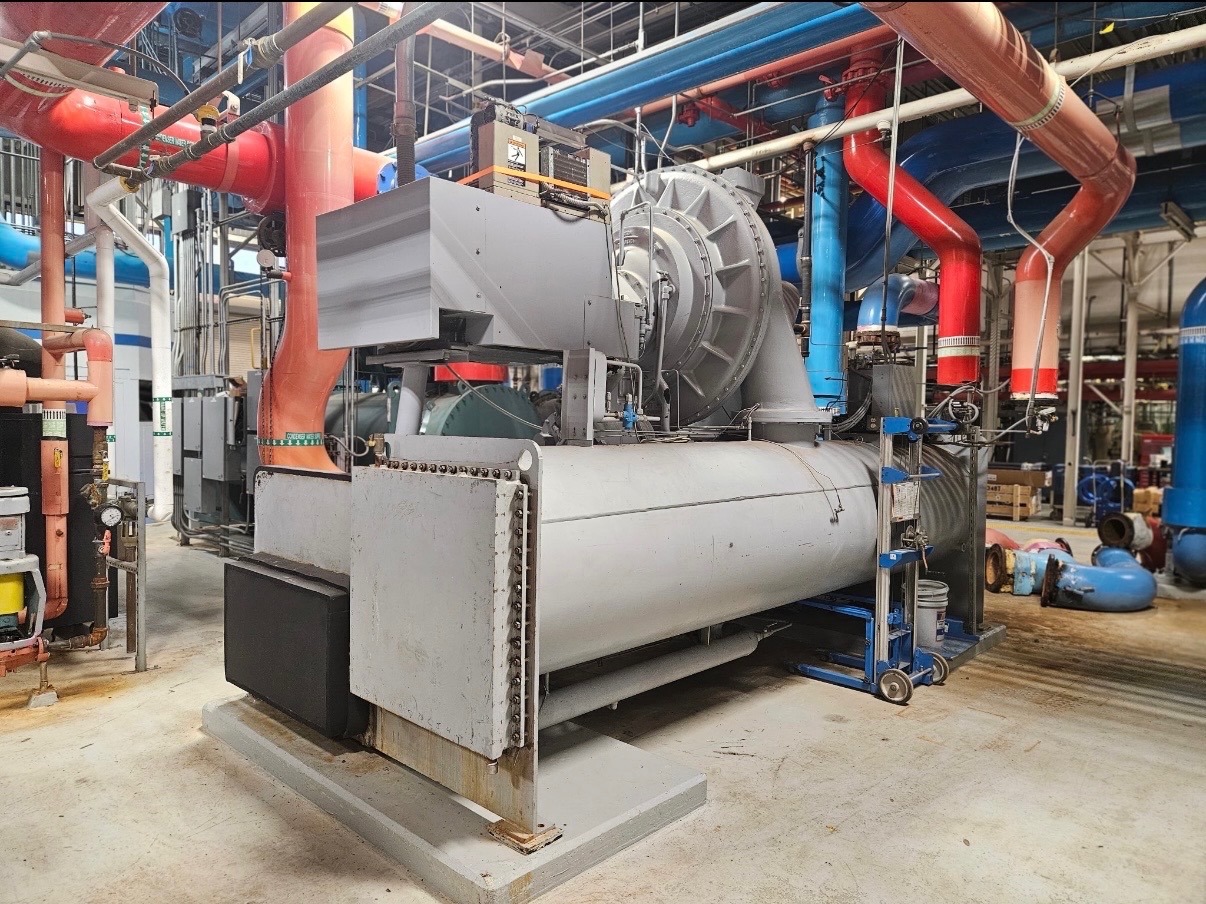
Start with the equipment and the project
Planning for a Surplus Daikin Chiller in Florida starts by separating two questions: what is being sold, and how can it be removed safely? The answers depend on the actual machine and property, not on a standard assumption about every chiller. We buy used and surplus equipment in Florida, consider all tonnages and refrigerants, and do not require a test run. An owner can share any existing details about the unit, its connections and its location without diagnosing it. Early coordination makes the offer and removal conversation easier to understand.
Identify the actual machine, not just the brand
The manufacturer name is a useful starting point, but it does not by itself identify a chiller's model, capacity, refrigerant, weight or present condition. If an accessible nameplate or equipment record is available, share its details along with a safe photograph of the full unit. If the model cannot be read, describe the machine and its surroundings instead; the absence of a label does not prevent an initial discussion. We are a buyer of used equipment, not a claim of manufacturer authorization or affiliation. The offer and removal approach depend on the actual unit and agreed scope.
No test run is required
The equipment does not need to be started or tested for us to consider it. That can matter when a chiller is idle, disconnected, missing a component or no longer part of the active cooling plan. Describe the known condition honestly and distinguish what you have observed from information you do not have. A photograph or old service note may be useful, but neither is a prerequisite for making contact. Do not reconnect equipment or attempt a test simply to request an offer. The buyer can review available information and discuss any uncertainties as part of the proposed sale.
Refrigerant identification and recovery
All refrigerants can be considered; an owner does not need to identify the refrigerant before making contact. If information is available on a nameplate or in existing records, share it and specify which machine it refers to. Do not assume the original label necessarily describes the present contents. Refrigerant recovery is work for appropriately qualified professionals using a plan suited to the equipment and applicable requirements. We handle recovery as part of the agreed removal scope. Owners should not vent, release or attempt to recover refrigerant themselves merely to prepare a chiller for sale.
Loading, freight and hauling are covered
We handle loading, freight and hauling for the agreed purchase, and all freight is covered. That does not eliminate the need to understand how a machine gets from its present location to the loading point. Tell us whether there is an available staging area, what access a vehicle may have and whether the equipment is still inside or on a roof. If the property has delivery or pickup rules, the facility contact can explain them before scheduling. The buyer and owner should confirm what is included in the removal scope, including any auxiliary items that are intended to travel with the chiller.
Decide whether auxiliary items are part of the sale
Not every item next to a chiller automatically belongs in the transaction. Pumps, controls, pipework and other accessories may serve a wider system or may be retained for another project. Tell us which machine you intend to sell and whether any additional components are actually included. When in doubt, identify an item as uncertain rather than promising it to the buyer. The equipment owner and facility team can review the proposed boundary before the offer and removal scope are finalized. This reduces confusion over what is to be disconnected, loaded and hauled away.
Separate electrical and mechanical disconnect planning
A chiller may have electrical, control, refrigerant and fluid connections, each of which should be considered in the removal scope. The fact that a machine is not running does not establish that every connection is isolated. Tell the buyer whether the equipment remains connected and identify the facility contact who understands the surrounding system. We handle necessary disconnects as agreed, using appropriately qualified personnel. The owner should not cut, open or energize connections for the purpose of requesting an offer. The people responsible for the site can coordinate the work so equipment outside the sale is clearly distinguished.
What to share when you contact us
If the chiller may be available, contact us with a description and the location in Florida. Existing labels, photos and records can help, but they are not prerequisites and the unit does not need to be tested. Explain whether anything must remain connected or operating around it and who has authority to approve the sale. We can discuss the cash offer, upfront payment and the appropriate recovery, disconnect, rigging and freight arrangements. The owner can decide whether the agreed scope suits the project.
- Identify the equipment and the person authorized to sell it.
- Share safe photographs or existing records if available; neither testing nor complete records are required.
- Discuss access, included work, payment and timing before scheduling removal.