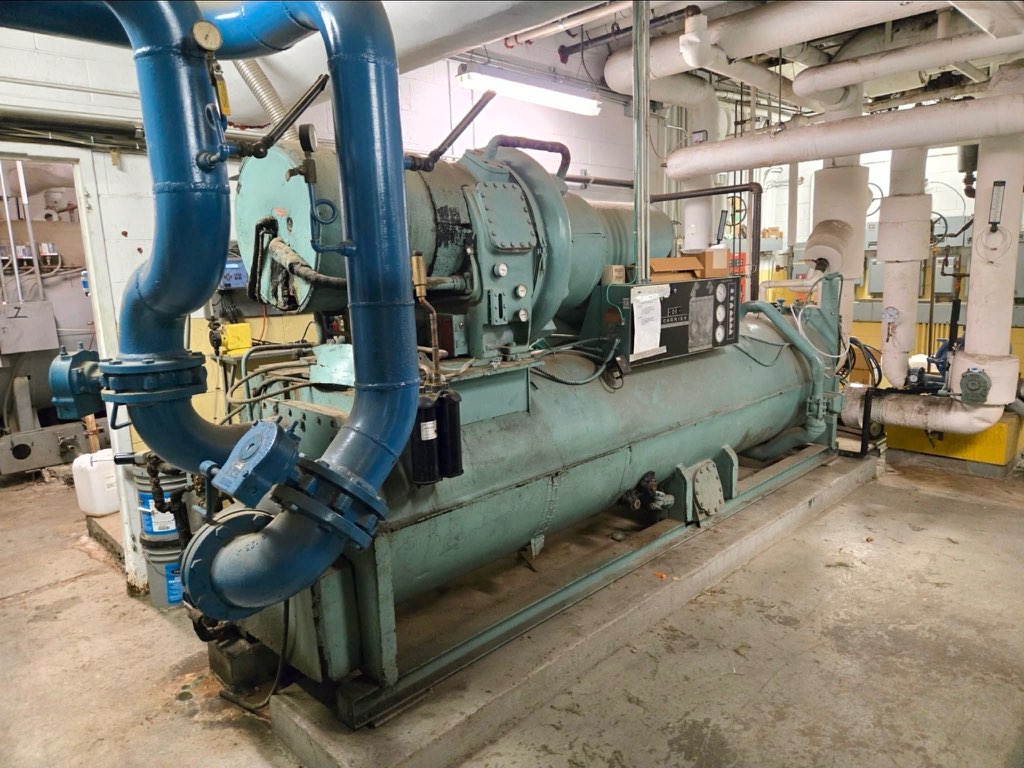
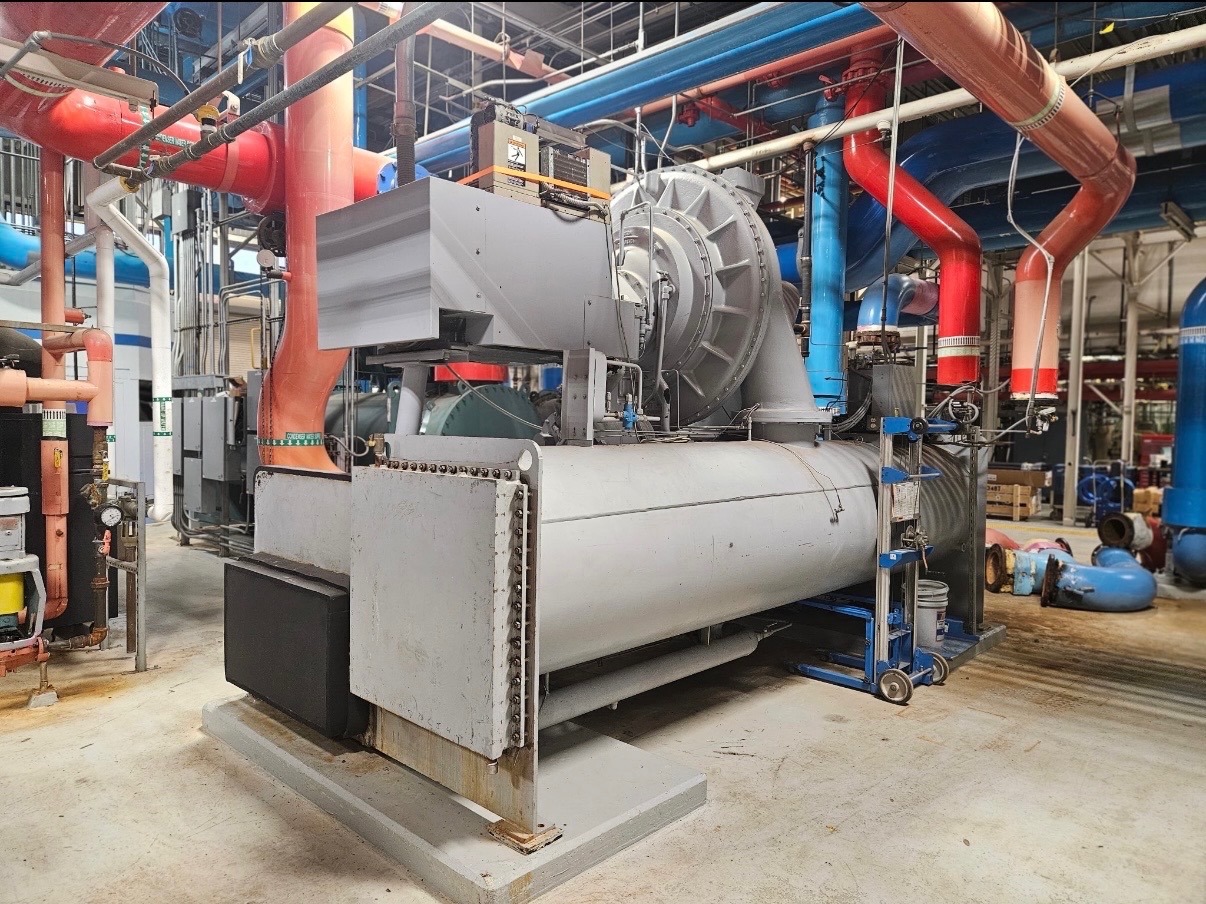
Start with the equipment and the project
Planning for a scroll chiller requiring refrigerant recovery in Florida starts by separating two questions: what is being sold, and how can it be removed safely? The answers depend on the actual machine and property, not on a standard assumption about every chiller. We buy used and surplus equipment in Florida, consider all tonnages and refrigerants, and do not require a test run. An owner can share any existing details about the unit, its connections and its location without diagnosing it. Early coordination makes the offer and removal conversation easier to understand.
What to share about a scroll chiller
When a scroll chiller is no longer needed, describe the complete unit that the owner wishes to sell, not just a compressor or an assumed component count. A manufacturer label, photograph or existing equipment schedule may help identify it, but those records are not required to begin the conversation. Explain the known condition and whether the chiller remains connected. The cooling configuration and access route should be checked against the actual machine rather than inferred from the word scroll. We handle the agreed removal and covered freight, with no test run required to request consideration.
Refrigerant identification and recovery
All refrigerants can be considered; an owner does not need to identify the refrigerant before making contact. If information is available on a nameplate or in existing records, share it and specify which machine it refers to. Do not assume the original label necessarily describes the present contents. Refrigerant recovery is work for appropriately qualified professionals using a plan suited to the equipment and applicable requirements. We handle recovery as part of the agreed removal scope. Owners should not vent, release or attempt to recover refrigerant themselves merely to prepare a chiller for sale.
Describe the access path early
Access planning begins where the equipment sits and continues to the place where it can be loaded. Explain whether the chiller is on a roof, at ground level or inside a building, and identify any known restrictions such as narrow doors, active work areas or limited staging space. These are questions to resolve, not assumptions about any particular property. The removal team can use the information to plan rigging and loading appropriate to the job. The facility contact should also explain how personnel enter the site and whether another trade is expected to be working along the same route.
Cash offers and payment before removal
We make cash offers and provide payment upfront on the agreed terms. Ask how the proposed payment, equipment description and work scope relate to one another before accepting an offer. For example, an offer for one disconnected machine is not necessarily the same as a proposal involving several machines still tied into a shared system. Clarifying that distinction avoids treating an informal estimate as a finished agreement. There is no promise of a particular price: capacity, identifiable equipment, condition and access are among the details that may affect the proposed transaction. Confirm who can approve the agreement for the owner.
Plan lifting and rigging around actual conditions
Rigging is a planning question, not a standard procedure that can be selected from the equipment name alone. The team must understand the load, available attachment information, clearances and the route to a loading area. If a crane is appropriate, its placement and the lift path must be evaluated against the actual property conditions. Other handling methods may be appropriate in different circumstances. We handle the crane and rigging work needed for the agreed project. Owners should not improvise a lift, move a heavy unit or rely on a cooling-capacity number as an estimate of weight.
Establish who can authorize the sale
A building manager, contractor and equipment owner may be different people. Before accepting a proposal, identify the party that owns the machine and the person authorized to agree to its sale and removal. If the property is leased, under renovation or changing hands, the relevant documents or responsible parties may need to be checked. Having access to a mechanical room does not by itself establish ownership. The buyer should know who can approve the commercial terms and who can arrange access on removal day. Where ownership is uncertain, resolve it with the appropriate parties rather than guessing.
What to share when you contact us
A productive first conversation can be brief: describe the equipment, its location and the person authorized to sell it. If there are several machines, distinguish them as clearly as the available information allows. Flag known site restrictions, shared connections and any timing needs, without opening or testing the unit. We buy used chillers for cash offers with payment upfront on agreed terms, and we handle the agreed removal and covered freight. Review the equipment boundary and responsibilities with the buyer before work begins.
- Identify the equipment and the person authorized to sell it.
- Share safe photographs or existing records if available; neither testing nor complete records are required.
- Discuss access, included work, payment and timing before scheduling removal.