Start with the equipment and the project
An inquiry about a 50 to 99-ton chiller in Florida can begin with a straightforward description rather than a complete technical file. Explain which chiller is no longer needed, where it sits and whether it remains connected, if known. We buy used and surplus chillers throughout Florida; all tonnages and refrigerants can be considered and testing is not required. The actual offer and handling plan depend on the machine and site. Identifying the owner and the boundaries of the proposed sale is as important as identifying a manufacturer or cooling capacity.
Cooling capacity is not shipping weight
Chiller capacity is commonly described in tons of cooling. That number is useful for identifying the equipment, but it is not the machine's physical weight and cannot be used on its own to select a crane or transport vehicle. A nameplate, equipment documentation or an existing record may show the capacity; if not, share an approximation and explain its source. For removal, the team also needs reliable dimensions, weight information when available and a clear understanding of the lift path. All tonnages can be considered. Never assume that two machines with similar cooling ratings have identical handling requirements.
No test run is required
The equipment does not need to be started or tested for us to consider it. That can matter when a chiller is idle, disconnected, missing a component or no longer part of the active cooling plan. Describe the known condition honestly and distinguish what you have observed from information you do not have. A photograph or old service note may be useful, but neither is a prerequisite for making contact. Do not reconnect equipment or attempt a test simply to request an offer. The buyer can review available information and discuss any uncertainties as part of the proposed sale.
Loading, freight and hauling are covered
We handle loading, freight and hauling for the agreed purchase, and all freight is covered. That does not eliminate the need to understand how a machine gets from its present location to the loading point. Tell us whether there is an available staging area, what access a vehicle may have and whether the equipment is still inside or on a roof. If the property has delivery or pickup rules, the facility contact can explain them before scheduling. The buyer and owner should confirm what is included in the removal scope, including any auxiliary items that are intended to travel with the chiller.
Photographs that make the conversation useful
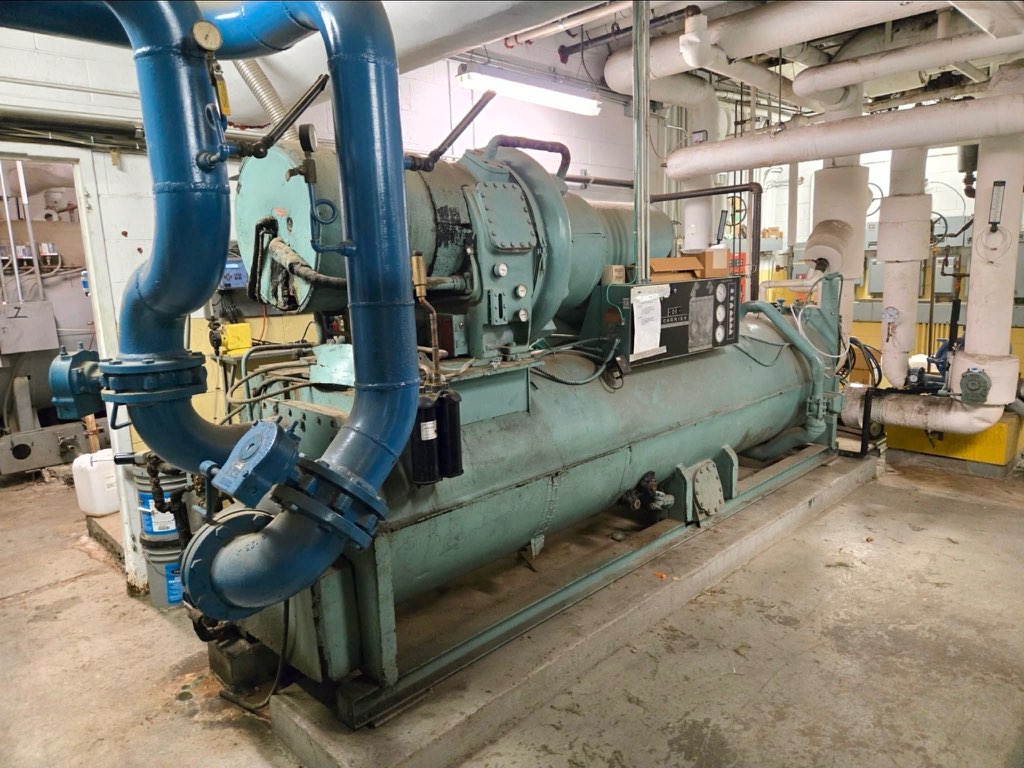
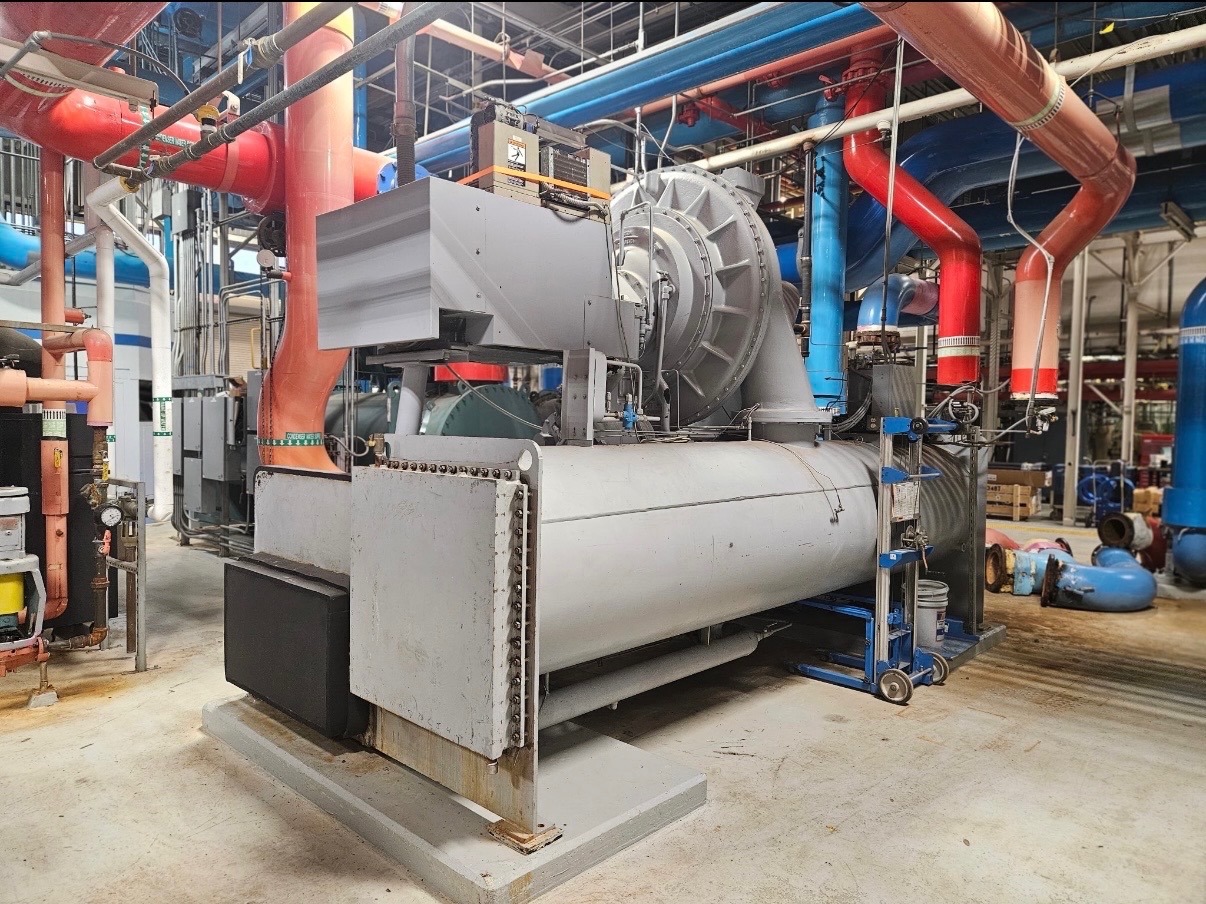
A few safe, clear photographs can show different aspects of the same project: the whole chiller, any accessible identification plate, surrounding connections and the route toward an exit or loading area. Wide images help show clearances, while close images can make existing labels easier to read. There is no need to open equipment or enter a restricted area to obtain a picture. If photographs are unavailable, begin with a written description and explain the limitations. The buyer can discuss what further information would be useful; pictures are helpful, not a condition for asking about an offer.
How the offer and removal fit together
A useful offer starts with the equipment being sold and the work needed to reach it. A clear photograph, an approximate location within the building and any available nameplate information can help us understand the opportunity. They are helpful starting points, not conditions for a conversation. If some details are unavailable, describe what you do know and point out the gaps. We can discuss a cash offer and the intended scope rather than asking you to guess at a machine's condition. Before any work is scheduled, the owner and buyer should agree which machine and accompanying items are included, the payment timing and how access will be arranged.
Define responsibilities before the crew arrives
A clear project discussion identifies who is supplying access, who speaks for the owner and which removal tasks the buyer will handle. We handle crane and rigging, refrigerant recovery, disconnects, loading, freight and hauling as needed under the agreed scope. The facility contact can explain site-specific rules, operational constraints and the location of the equipment. If another contractor is involved, clarify the handoff between parties rather than leaving it implicit. Keep the commercial agreement and the site plan aligned so everyone knows which machine is being purchased and what is expected on the day of removal.
What to share when you contact us
Gather only information that is already safe and available: the machine location, visible identifying details, known condition and the facility contact. If something is uncertain, say so rather than guessing. We consider all tonnages and refrigerants and do not require testing. Our cash offer and upfront payment terms are discussed with the owner, together with the work needed for removal and the covered freight. Before scheduling, confirm which unit and any auxiliary items are included and how the crew will access the property.
- Identify the equipment and the person authorized to sell it.
- Share safe photographs or existing records if available; neither testing nor complete records are required.
- Discuss access, included work, payment and timing before scheduling removal.